



You don’t need a big budget to get huge results with influencer campaigns.
Our recent campaign for luxury handbag brand Dooney and Bourke delivered a 7-figure bump in revenue from a 5-figure spend. Even for a professional marketing agency like Digital Position, a campaign that delivers a 183x ROI is one worth deconstructing and learning from.
Why Influencer Marketing Scares Most Brands
If influencer marketing feels like a gamble for most e-commerce brands, it’s because most marketing teams run it like one.
They chase reach instead of relevance.
They measure likes instead of revenue.
And they treat creator content as a one-time post instead of a reusable asset.
That approach makes influencer campaigns unpredictable, unscaleable, and unaffordable for anyone without a lot of zeros in their budget.
But when influencer marketing is designed as a system, even a small (few thousand dollar) test can outperform traditional brand photography across Meta, Google, and retargeting campaigns for months.
The System that Makes Influencer Campaigns Successful
No celebrities. No viral moments.
High-performing influencer campaigns are designed from day one to support paid media, creative testing, and multi-channel deployment.
From the start, the goal for this Dooney campaign was creative leverage instead of just influencer reach.
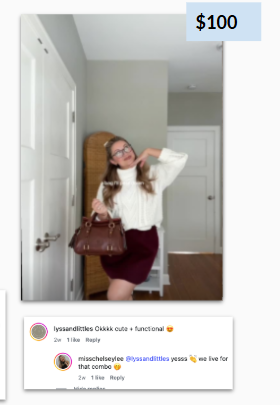
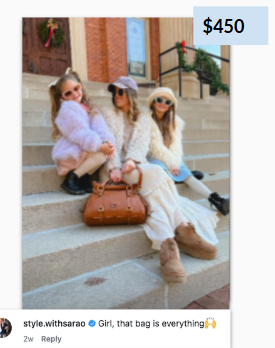
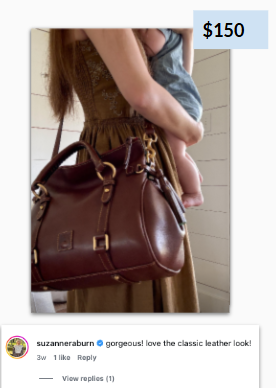
Every creator was briefed on real-life use, and the focus was on creating content around situations Dooney’s buyers already recognize:
- Daily carry
- Family routines
- Longevity
- Nostalgia.
But most importantly, the content was created with paid usage in mind, not as a secondary option.
What Our Professional Marketing Team Learned From the Dooney Campaign
First, influencer content outperformed brand photography in all paid environments.
Across Meta and retargeting campaigns, creator assets consistently delivered stronger engagement and lower acquisition costs than polished studio product imagery.
Second, the content lasted.
Instead of cycling out in weeks like most brand creative, these influencer assets kept performing for months. They didn’t fatigue quickly because they didn’t look like ads in the first place.
Third, scale came from reusing the same small set of high-performing assets.
We didn’t need to contract additional influencers or pay for another round of creative because these assets were built for versatility. They worked across prospecting, retargeting, and mid-funnel placements.
How We Minimized the Risk of an Influence Campaign
Before launch, this entire effort was treated as a test.
The budget was intentionally modest.
The expectations were performance-driven, not impression-driven.
Success was measured by how an asset performed when we put money behind them.
Once the data came in, the decision of where to put the budget was completely obvious.
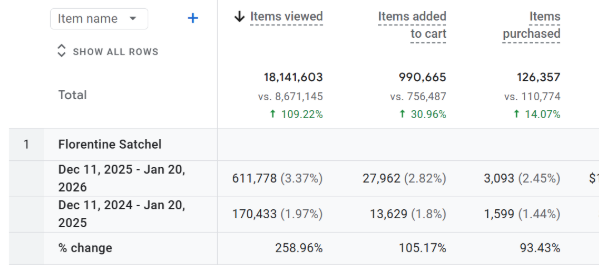
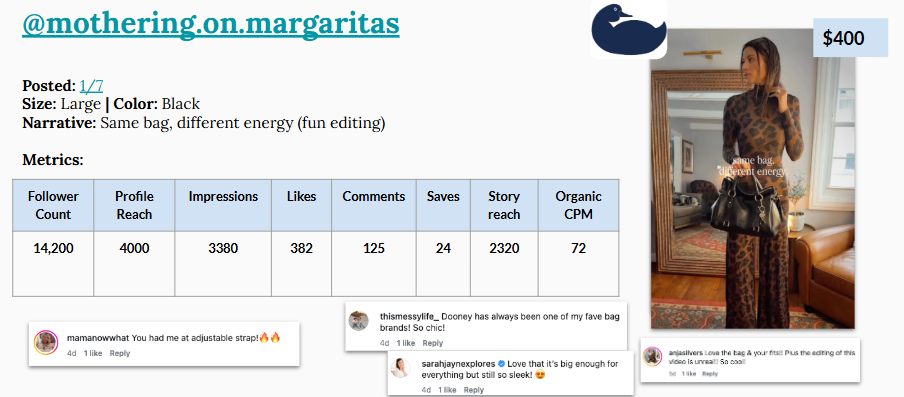
Of course, we still watched engagement on the posts, but those metrics were contextual.
Our decisions were made based on downstream behavior:
- Site traffic
- Items added to cart
- Purchases being made
That clarity removed the risk.
This is where the campaign stopped being an influencer experiment and became a repeatable input to the paid media engine.
What This Influencer Campaign Ultimately Proved
The Dooney campaign clarified something many brands struggle to validate:
A small, well-structured influencer test can function as a creative accelerator without being a gamble.
By treating influencer content as paid-ready creative from the start, the team gained faster signal on what messaging resonated, reduced creative churn, and extended the lifespan of assets across multiple channels.
That efficiency was the real ROI driver.
For brands considering influencer marketing, the takeaway is that you don’t need to commit to a big budget or find a big influencer to partner with.
It’s to start with a clearer purpose: generating adaptable creative that earns its place once performance data is applied.
When influencer campaigns are designed that way, they stop feeling experimental and start behaving like a reliable input to growth.
If you want guidance on how to create an influencer campaign for your brand, talk to a strategist.
Key Takeaways
- Influencer marketing delivers the highest ROI when it’s designed to generate paid-ready creative, not organic reach.
- A small, controlled influencer test can outperform traditional brand photography across Meta, Google, and retargeting when assets are built for reuse.
- Measuring success by downstream performance (traffic, add-to-cart, purchases) removes most of the perceived risk.
- Creative longevity is what unlocks efficiency and revenue impact with influencer campaigns.
- Influencer campaigns work best when treated as creative infrastructure that feeds paid media, not as standalone social activations.
Frequently Asked Questions
How much budget do you need for an influencer campaign to be effective?
A well-structured influencer test can cost a few thousand dollars and still produce meaningful results if the goal is paid media performance rather than organic reach.
Is influencer marketing only effective with large or celebrity influencers?
No. The Dooney campaign proved that non-celebrity creators can outperform traditional brand creative when content aligns with real customer use cases.
What metrics matter most when evaluating influencer campaigns?
Profitability is the ultimate goal, but focusing on downstream metrics: site traffic, add-to-cart events, purchases, CPA, and creative lifespan is important. Engagement metrics provide context but shouldn’t drive decisions.
Why does influencer content outperform brand photography?
Because the content showed products in real-life scenarios, customers recognize, making it feel contextual rather than promotional once placed in paid media.
How do influencer campaigns reduce creative fatigue?
Influencer assets often last longer in paid environments because they don’t look like ads, allowing brands to run them for months without rapid performance drop-off.
Can influencer content be reused across multiple channels?
Yes. When usage rights are secured upfront, influencer content can support prospecting, retargeting, mid-funnel ads, email, and landing pages.
What makes influencer marketing less risky for e-commerce brands?
Treating it as a test with performance-based evaluation rather than a branding exercise makes scaling decisions data-driven and obvious.
How should brands think about influencer marketing going forward?
As a way to accelerate creative testing and reduce content churn, not as a one-time campaign or awareness play.




no replies