



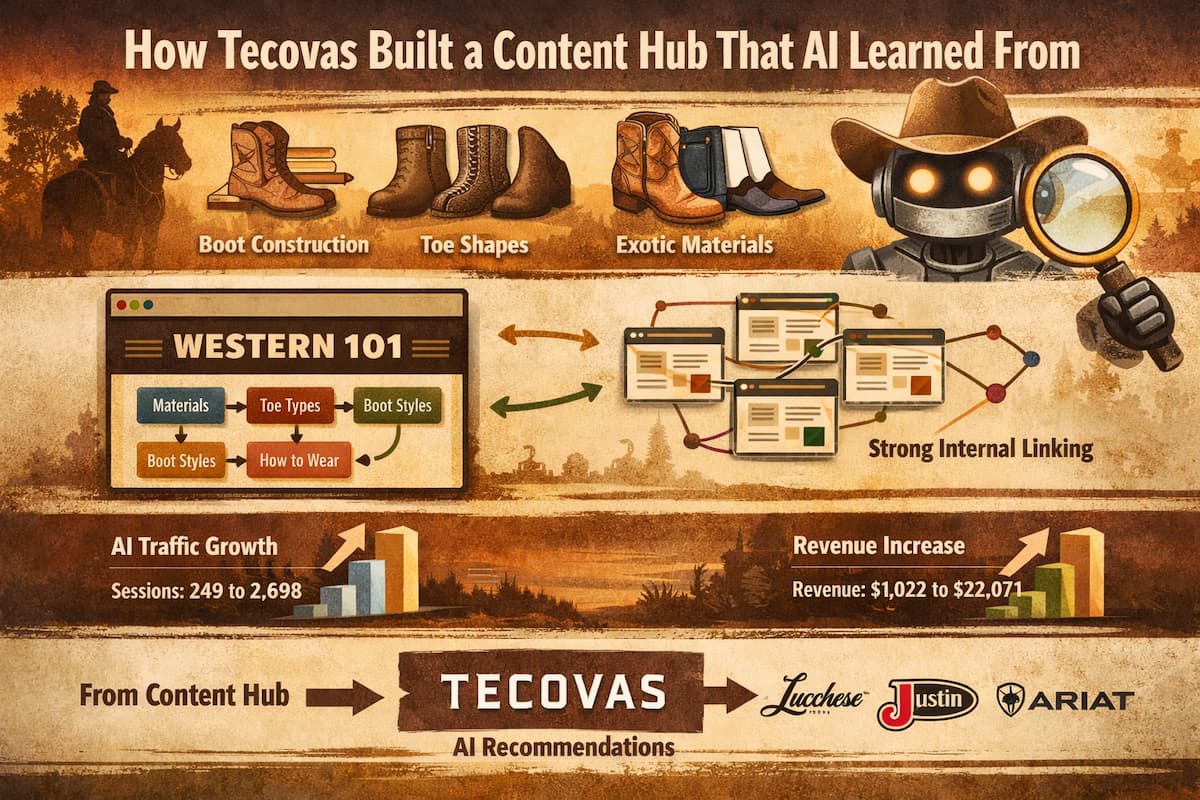
TL;DR
- AI recommends brands it understands well enough to place in a category, not just brands that sell products in that category
- Product pages alone don’t signal expertise, but a connected content hub does
- Tecovas built Western 101, a hub covering construction, materials, toe shapes, styles, and use cases, and AI learned to associate the brand with all of them
- The technical foundation matters too, because crawlability, site structure, and internal linking determine whether AI can actually use the content
- The result was AI sessions growing from 249 to 2,698 and revenue growing from $1,022 to $22,071 in 12 months
AI answer engines like ChatGPT and Grok don’t recommend products based on info from some master database. They take information from sources they understand to be experts in the space.
The problem for most brands is that product pages alone don’t signal expertise. Content that educates customers on your product is still important, but experts rarely talk about just one product or brand.
Brands that show up consistently in AI recommendations are the ones that built a content hub. Aka, a connected set of pages that teaches AI how the category works, including:
- Terminology
- Materials
- Styles
- Use Cases
- Comparisons
When those topics are organized and linked together, AI can recognize a network of related information and use it as a reliable reference point when generating answers, comparisons, and recommendations.
How AI Connects Brands to Product Categories
When a user asks ChatGPT for cowboy boot recommendations, it starts a process called entity clustering. It groups brands into clusters based on the attributes it associates with them, matching construction quality, style range, occasion or whatever the question is asking for.
Brands with enough content covering those attributes are more likely to get included.
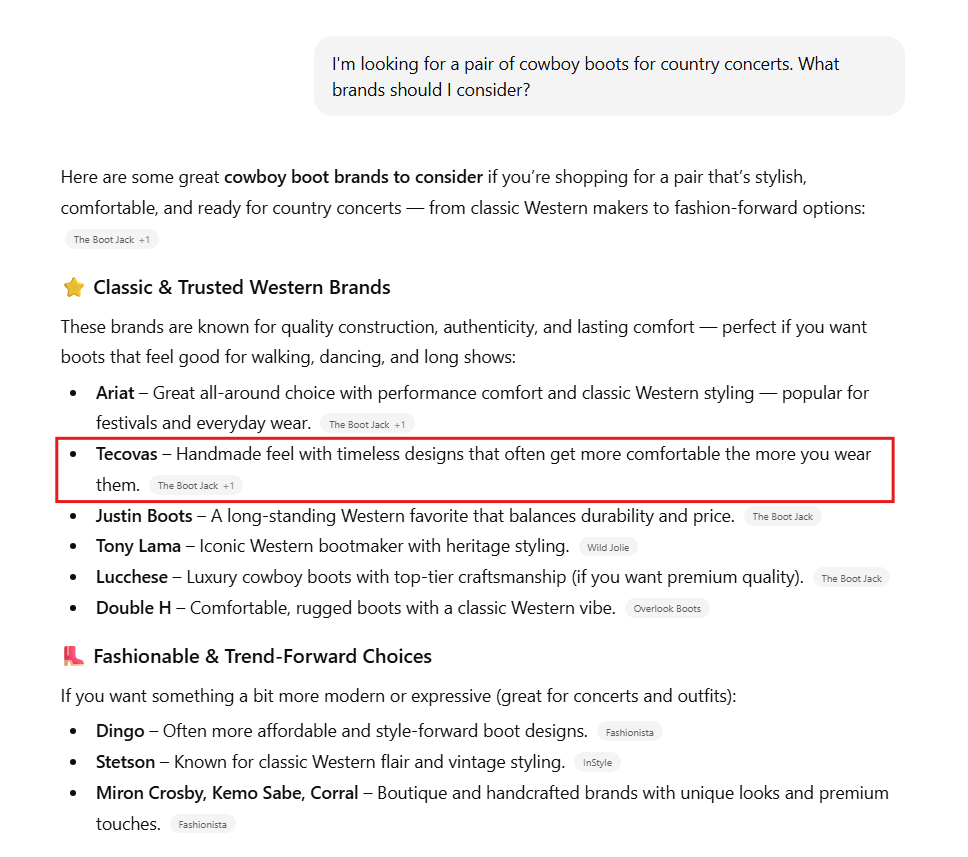
Tecovas shows up alongside legacy brands like Ariat, Justin, and Lucchese because AI has built a strong enough association between Tecovas and country concerts to confidently make the recommendation.
How Tecovas Used Educational Content to Show Up in AI
Tecovas built a content hub called Western 101 that covers the full scope of cowboy boot knowledge, with Tecovas as the consistent frame of reference throughout. The hub covers the topics customers actually use to make decisions:
- Boot construction: How boots are built, what quality indicators to look for, and why construction affects comfort and longevity
- Toe shapes: The differences between square toe, round toe, and snip toe, and when each is appropriate
- Boot styles: How cowboy, ranch, and work boots differ in construction and intended use
- Exotic materials: What distinguishes ostrich, alligator, and caiman leather in terms of texture, durability, and price
- Style guidance: How to wear cowboy boots across different occasions, including less obvious pairings like suits
Each of those topics is a decision point customers search for, and AI uses them to build attribute-level associations with the brand.
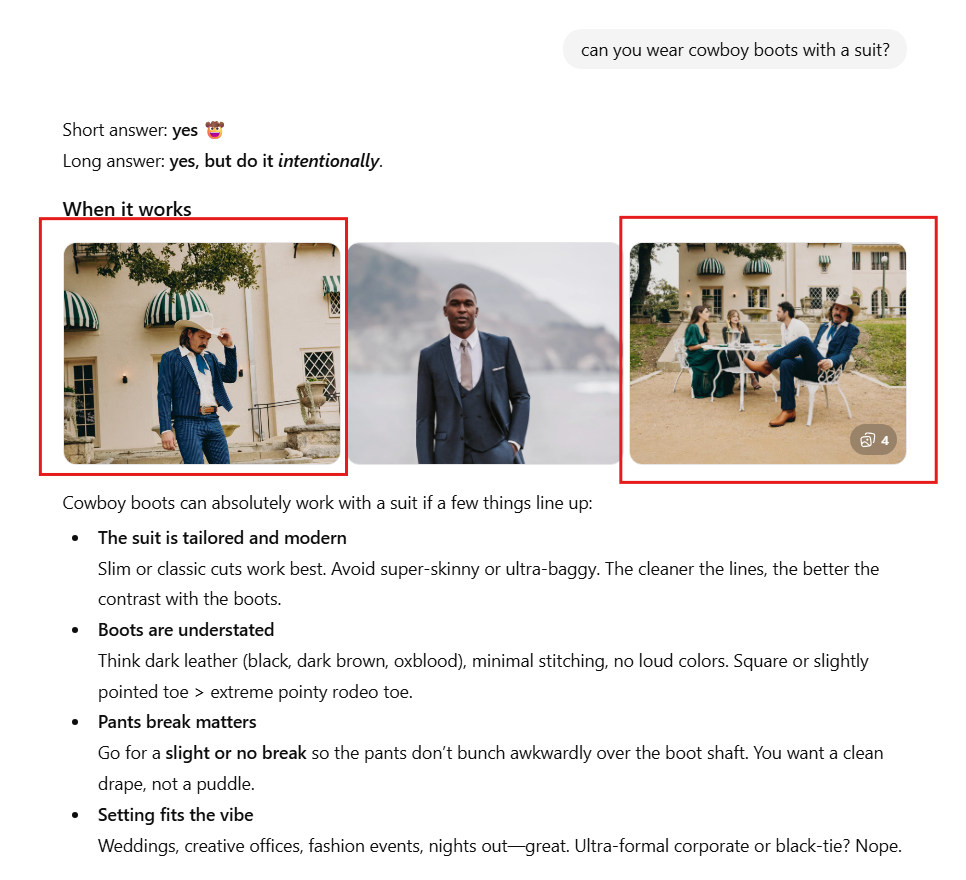
Ask “can you wear cowboy boots with a suit?” and ChatGPT pulls Tecovas imagery directly into the response. The hub isn’t just driving brand recommendations. It’s driving inclusion across the full range of questions buyers ask before they purchase, which is what leads to this:
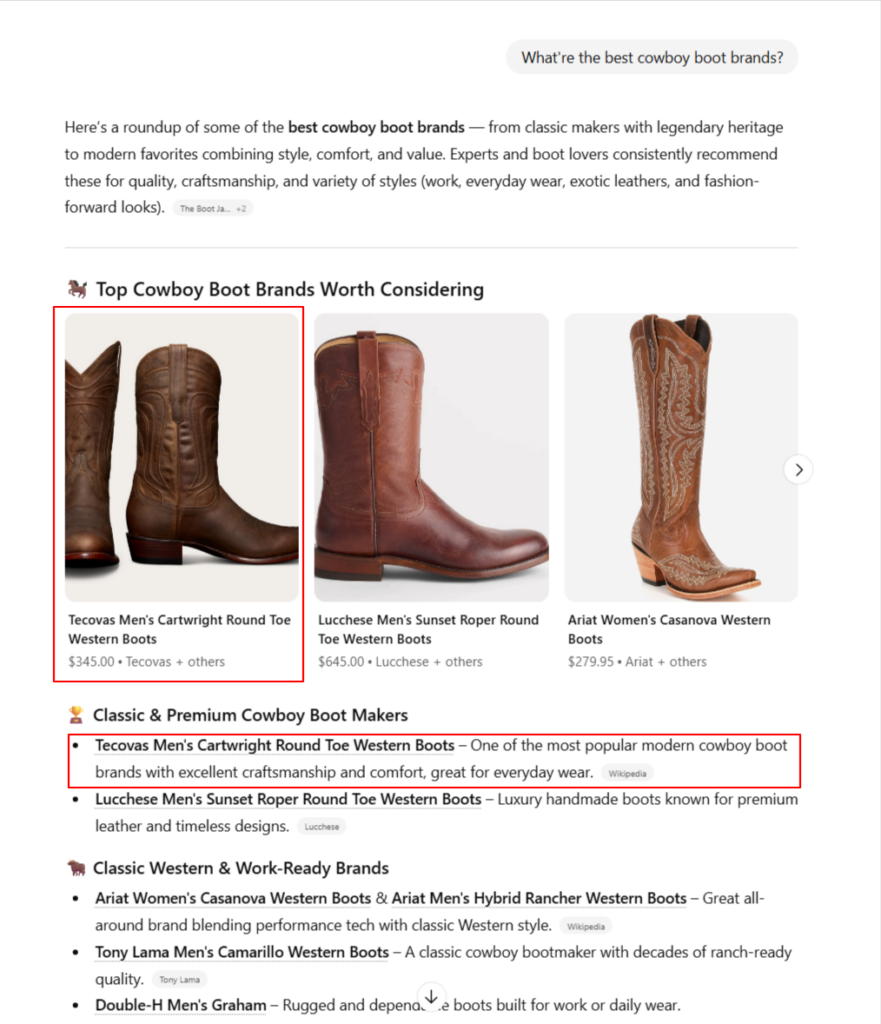
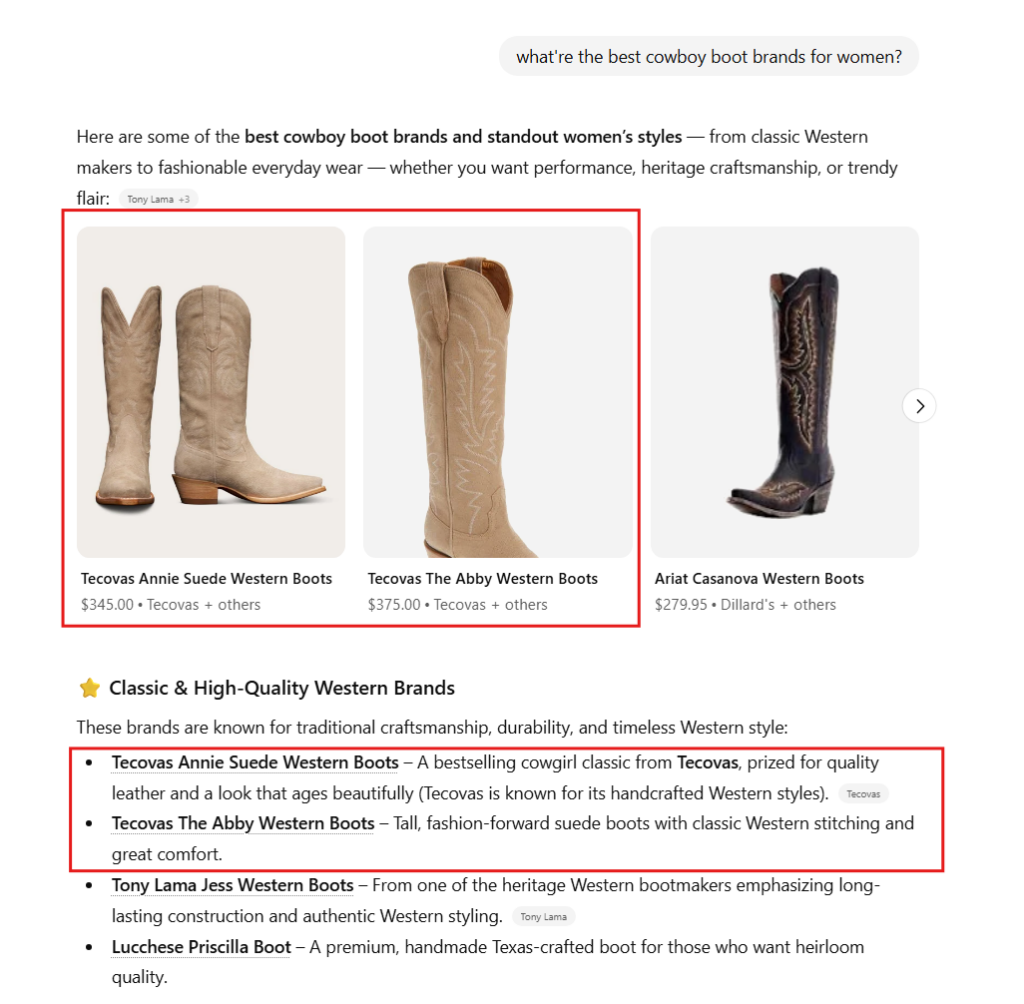
Specific Tecovas models, including the Annie Suede Western Boots and the Cartwright Round Toe, surfaced with product images and pricing. That only happens when AI understands a brand at the attribute level, not just the category level.
Technical Changes That Make Your Content Hub Machine Readable
Content strategy builds the association, but AI visibility also depends on whether AI can actually crawl and interpret the content. A hub that isn’t technically sound won’t deliver the same results no matter how good the writing is.
The required supporting work includes:
- Site structure and metadata: Optimize so AI could interpret how pages relate to each other
- Crawlability and indexation: Resolve issues that are blocking access to key pages
- Internal linking: Build structured links between educational pages and related product pages
That last point matters more than most marketers realize.
An educational page about ostrich leather that links clearly to ostrich leather product pages creates a signal AI can follow, connecting the explanation to the product explicitly rather than leaving AI to guess. Once the hub was technically sound, AI could follow the full structure from category explanation down to individual products.
The Results Building a Content Hub Can Deliver
Once the content hub was in place and the technical issues were resolved, AI traffic started compounding for Tecovas. Growth was relatively flat through winter, started building in spring, and accelerated sharply by October and November.
Here’s what changed between November 2024 and November 2025:
- Sessions: 249 to 2,698
- Purchases: 4 to 68
- Revenue: $1,022 to $22,071
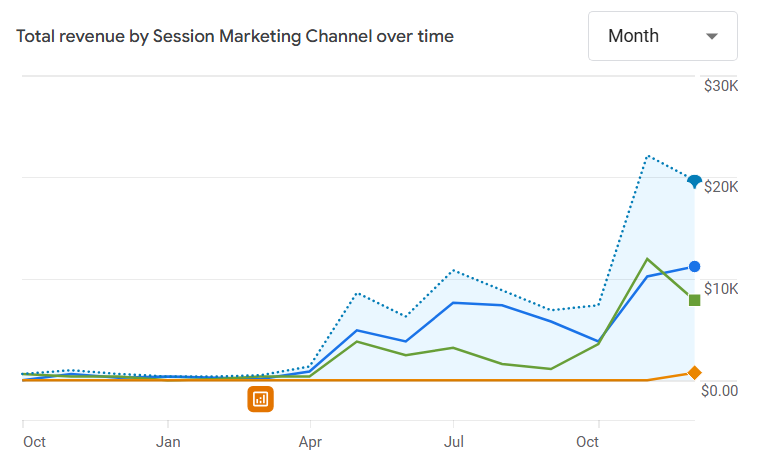
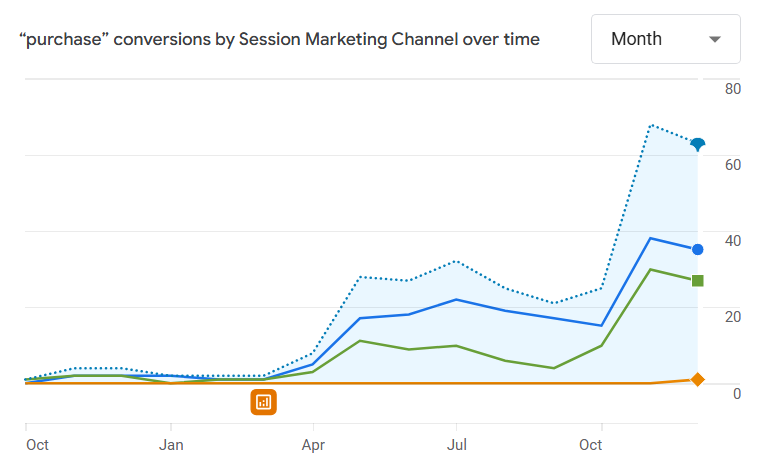
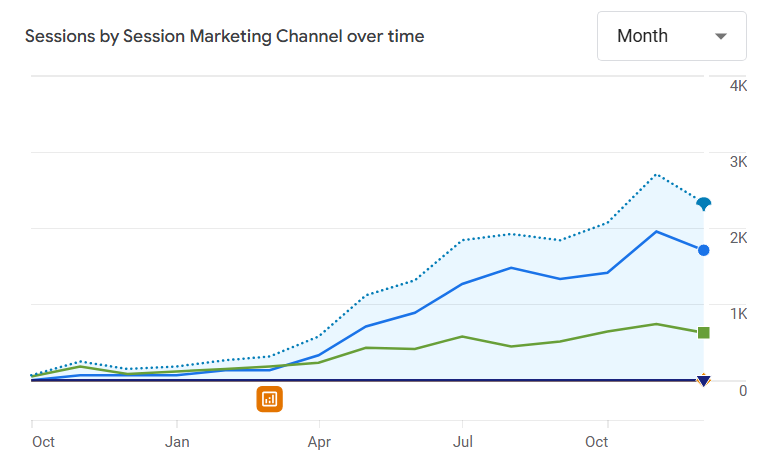
All three charts follow the same curve, and all three accelerated together in the back half of the year.
The revenue growing faster than sessions is worth noting.
These visitors aren’t arriving to browse. They’re mid-evaluation, having already been told by AI that Tecovas is worth considering, which means the recommendation happened before they ever reached the site.
What This Means for Your E-commerce Brand
AI recommends brands it can confidently place in a category, and that understanding is built through content. Showing up consistently in AI answers comes from giving AI the full picture of your expertise, organized into a hub it can crawl and learn from.
That’s actually good news if you’re reading this. The window to build category authority before your competitors do is still open. If you want to see what that looks like in practice, take a look at what our Organic Marketing team has built for e-commerce brands across a range of categories.
Frequently Asked Questions
How can I rank my brand in AI answers?
AI surfaces brands it can clearly associate with a product category. That association is built through content covering the full category, including terminology, materials, styles, and use cases, organized in a connected and crawlable structure.
What are AI product recommendations?
AI product recommendations are specific brand or product suggestions generated in response to buying-intent questions. Instead of a ranked list of links, AI selects a short set of options, and getting into that set requires category authority, not just keyword presence.
How do educational content hubs help with AI rankings?
Educational hubs give AI a complete picture of how a category works, with your brand as the consistent reference point. When someone asks about a specific material, style, or use case, the brand that explained those topics clearly is the one most likely to appear.
What is entity clustering in AI search?
Entity clustering is how AI connects brands, products, and attributes into related groups based on how consistently they appear together in content. When a brand covers specific materials, styles, and use cases repeatedly, AI builds an association between that brand and those attributes, which determines which searches trigger a recommendation.
What’s the difference between a content hub and a blog?
A blog is a collection of individual posts that each stand on their own. A content hub is a connected set of pages organized around a central category, where each page reinforces the others and links back to related topics and products. That structure is what allows AI to recognize a network of related information rather than a series of disconnected articles.
How do I know what topics to include in my content hub?
Start with the decisions customers make before they buy. If you sell cowboy boots, customers are comparing toe shapes, evaluating leather types, and figuring out what style fits their occasion before they ever pick a brand. Any topic that shows up in that decision-making process belongs in the hub.



)
no replies