


Every UGC rate card prices one video.
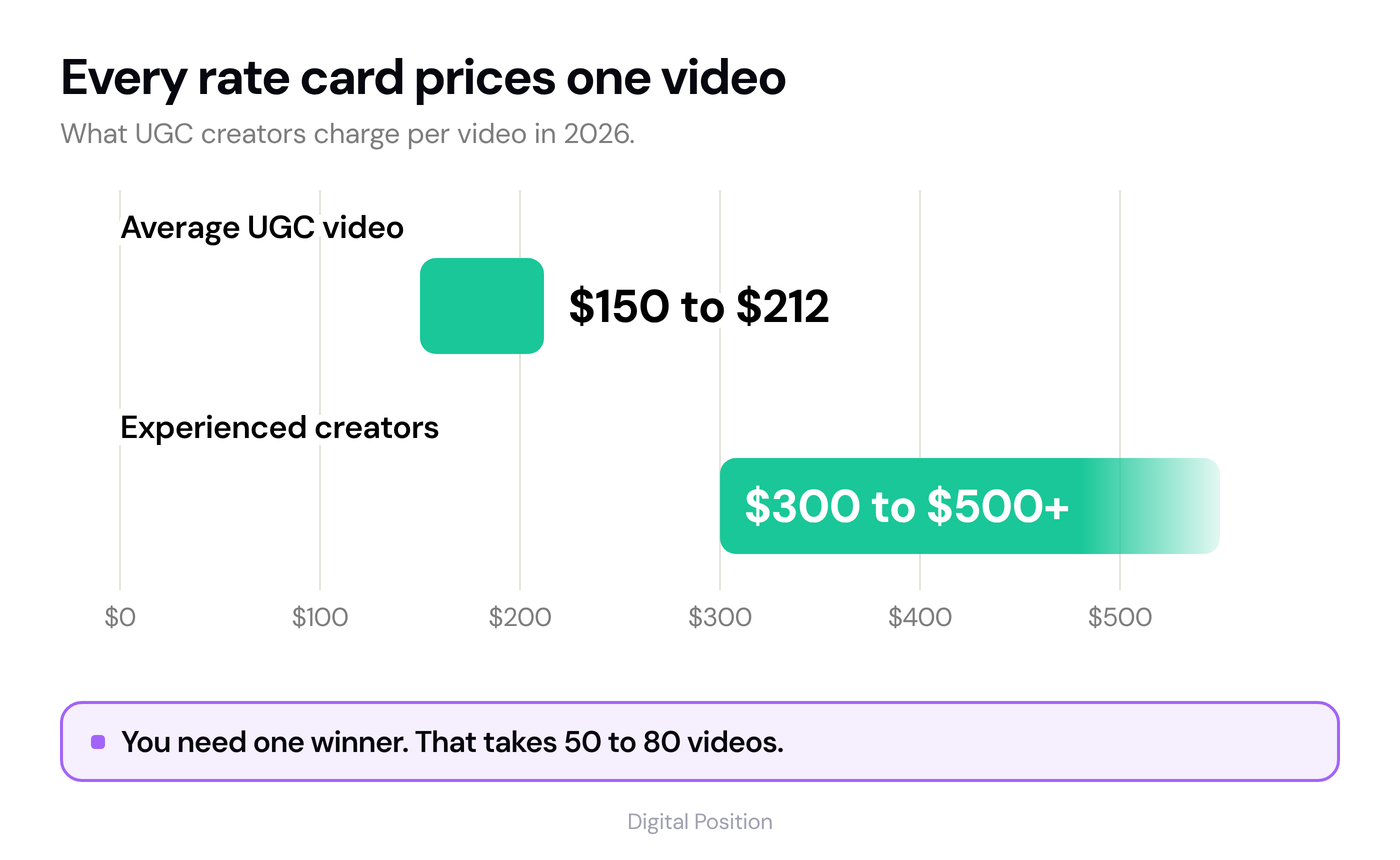
No brand needs one video. You need one winner, and on our programs that takes 50 to 80 videos.
So the number that decides your budget is what a usable video costs, and then what a winner costs. The creator’s rate is only the starting line.
Below is that math, from the rate card all the way to the winner.
TL;DR
- The market rate for one UGC video averages about $150 to $212
- Only about 70% of submissions get approved, and roughly the top third are strong
- It takes 50 to 80 videos to find one winner
- On Trybe, creators earn on results and the platform fee never tops 1.5%
- Samples, review time, and ad spend are the costs nobody puts on a rate card
What Do UGC Creators Charge Per Video in 2026?
Start with the number everyone quotes. Influee’s rate research puts the average UGC video at roughly $150 to $212. Experienced creators charge $300 to $500+, and paid usage rights usually cost extra on top.
Those numbers help if you’re a creator setting prices. Most of the pages ranking for UGC rates and UGC rate cards are written for exactly that person.
This post is the brand side.
From the brand side, a per-video rate hides the part that costs the most. All the videos that never make it into an ad, plus the ones that run and lose.
A flat-fee video also costs the same whether it becomes your best ad or never leaves the folder. You’re paying for the deliverable, and every bit of the performance risk stays with you.
Why Cost Per Video Is the Wrong Number
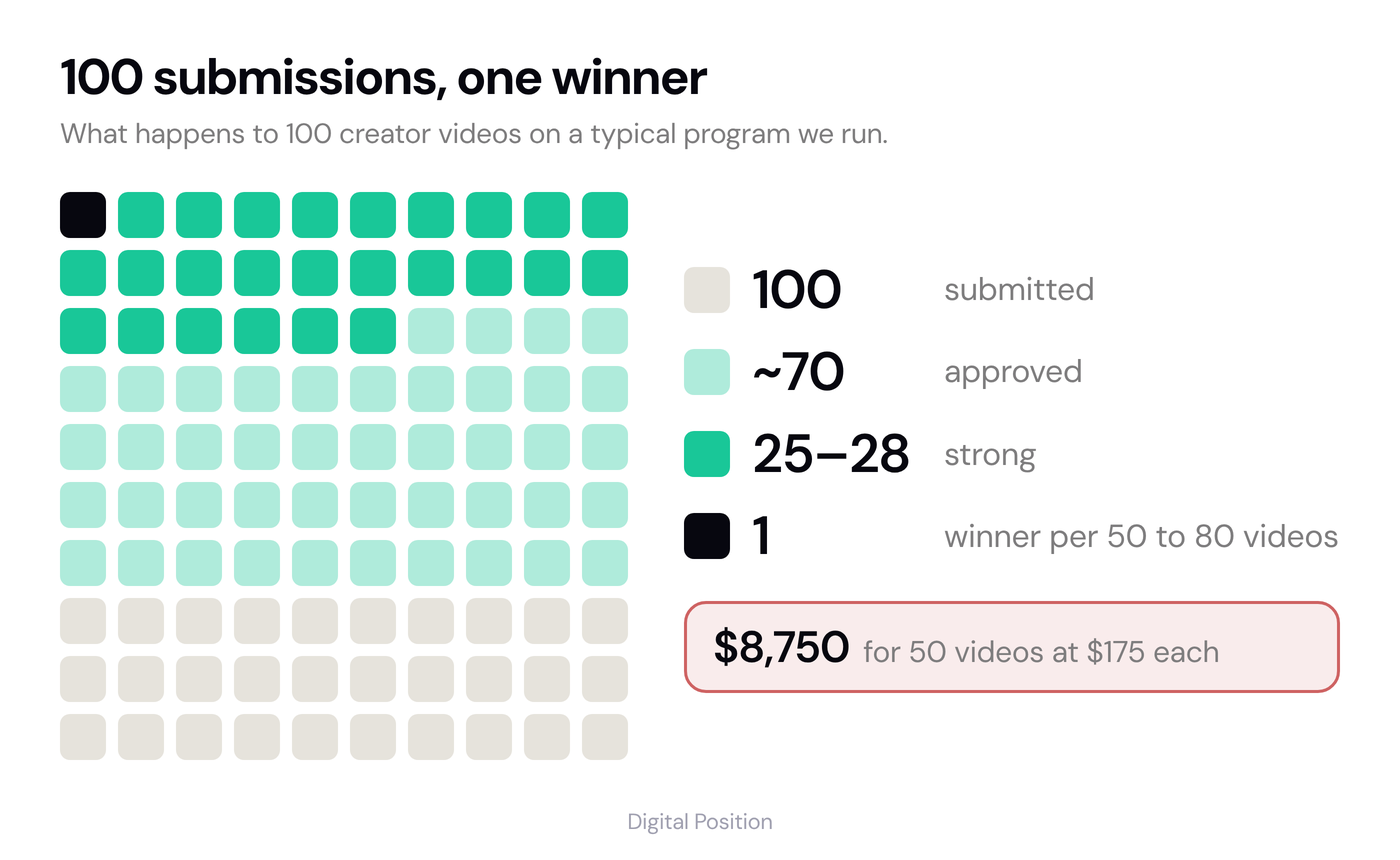
Follow 100 submissions through a typical program we run.
About 70 get approved. Our biggest supplement program runs at 72%.
Of those 70, roughly 25 to 28 are strong. That’s the top 35 to 40%, which matches our team’s early read on these programs.
On our programs, it takes about 50 to 80 videos to find one ad that can carry real spend. That’s the winner, and it’s the video that pays for the whole program.
Winners also don’t last forever. Even a strong ad fatigues, so the program has to keep producing the next batch while the current winner carries spend. Budget for a pipeline.
Now put a rate card next to it. At $175 a video, 50 videos is $8,750 before a single ad runs. Then add the samples, the review time, and the ad spend it takes to test them.
Budget for the 50 to 80 videos it takes to find a winner, not the one video on a rate card.
None of the guides ranking for UGC rates price a winner. Build your budget around it anyway, because it tells you whether the program worked.
How Does Performance-Based UGC Pricing Work?
Performance pricing moves the fee onto results. Trybe’s own cut is small: never more than 1.5%, charged as 1.5% of attributed sales, 1.25% of ad spend, or 1.5% of creator earnings on flat-rate pay. There are no seats or contracts.
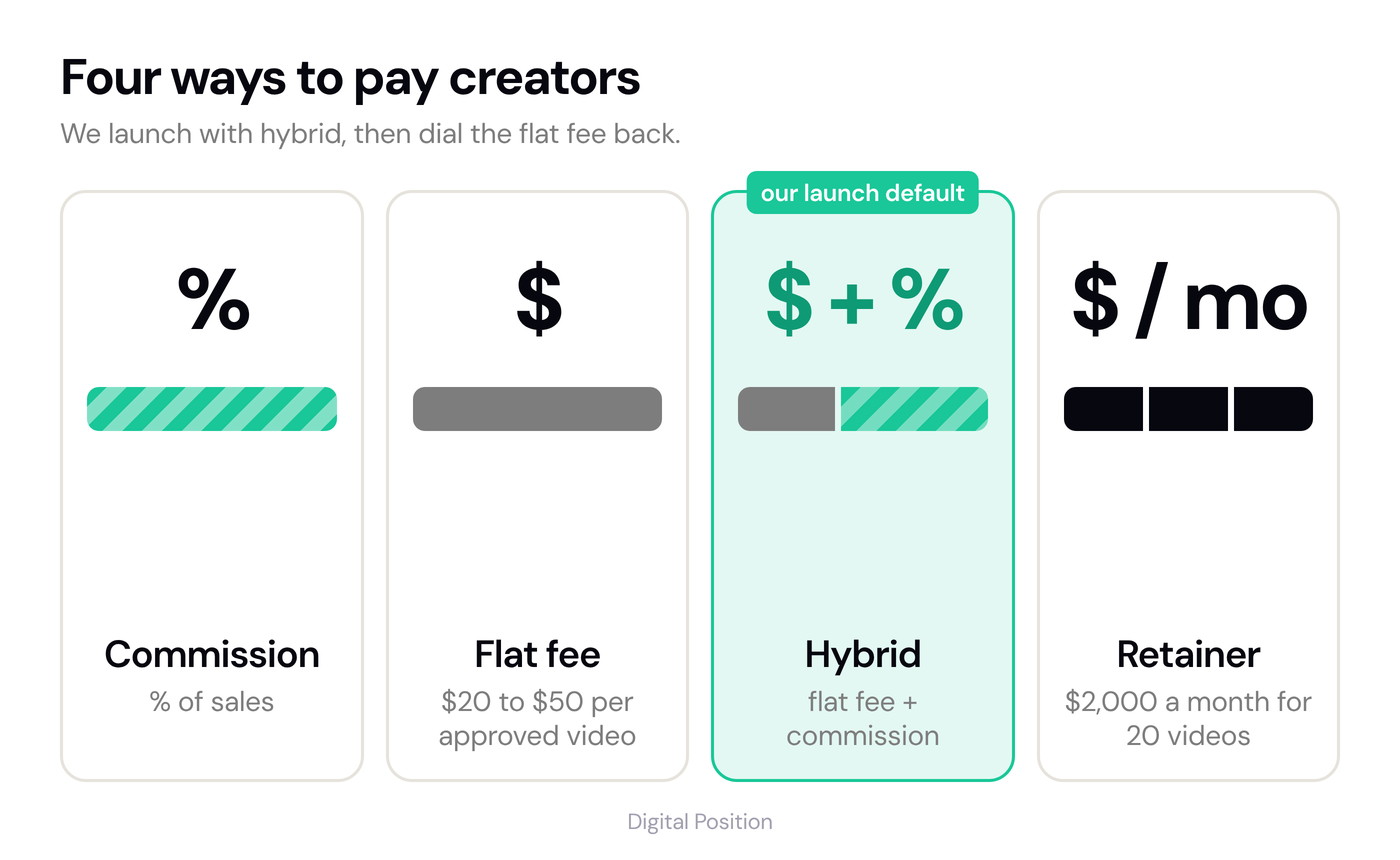
The real decision is how you pay creators. Payout rules can vary by product, so a low-AOV item can pay a flat fee while a hero product pays commission. You can also add performance triggers and an earnings cap per submission. Most programs mix four payout types.
1. Commission on Sales
Creators earn a percentage of the sales their ads drive. Our programs have used a 7-day last-click window.
2. Flat Fee Per Approved Video
You pay a set amount when you approve a submission. We often use $20 to $50 as a starter incentive.
3. Hybrid Payouts
A flat fee plus commission, and the default we launch with. Start hybrid, then dial the flat fee back once submissions are flowing. Commission-only launches look cheap on paper and get very few submissions, because creators compare your offer to every other brand in the app.
4. Retainers for Proven Creators
Once a creator proves they can sell, pay them to keep making. A top creator on one of our programs, with more than $300K in GMV over 30 days, offered 30 videos for $3K plus 15%.
What Commission Rates Are Brands Offering on Trybe?
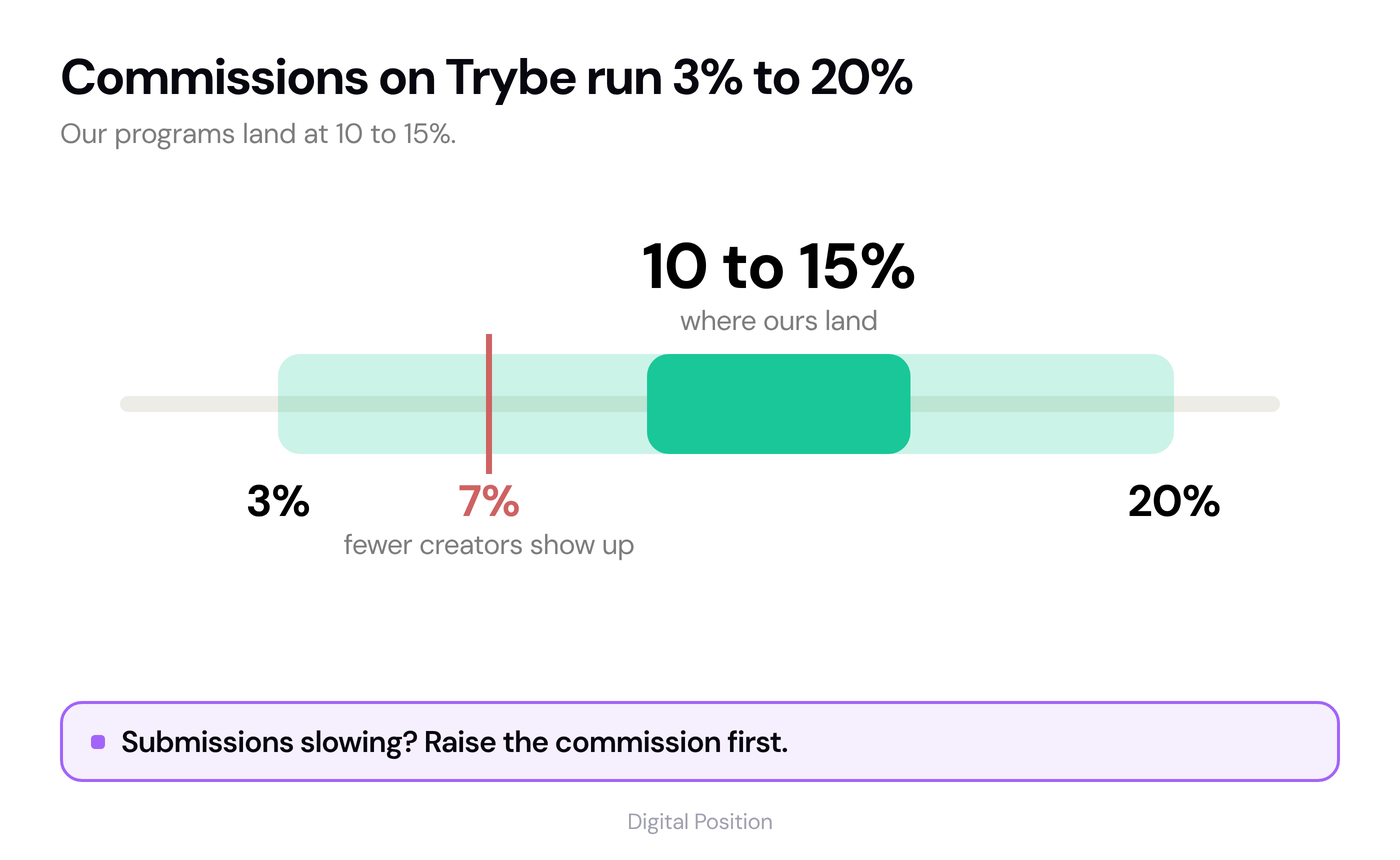
Across the Trybe programs we’ve looked at, commissions run from about 3% to 20%.
Some pay on GMV and some pay on ad spend. Those are different bases, so a 3%-of-spend offer and a 10%-of-sales offer can’t be compared head to head. A spend-based payout rewards creators for videos that get budget, and a sales-based payout rewards them for videos that convert. Pick the one that matches how you judge your ads.
If submissions slow down after launch, raise the commission or add tiers before you cut anything else. Creators follow the best offer in the app.
Our programs usually land at 10 to 15%. A 7% offer isn’t far outside the range, but it limits how many creators show up and how hard they work for you.
A few structures we’ve run:
- $100 per video plus 15% commission to launch
- $20 to $25 per video plus commission for a steady program
- $30 per submission with zero commission, for a short local push
- A $2,000 monthly retainer for 20 videos from a proven creator
What Else Goes Into the Real Cost?
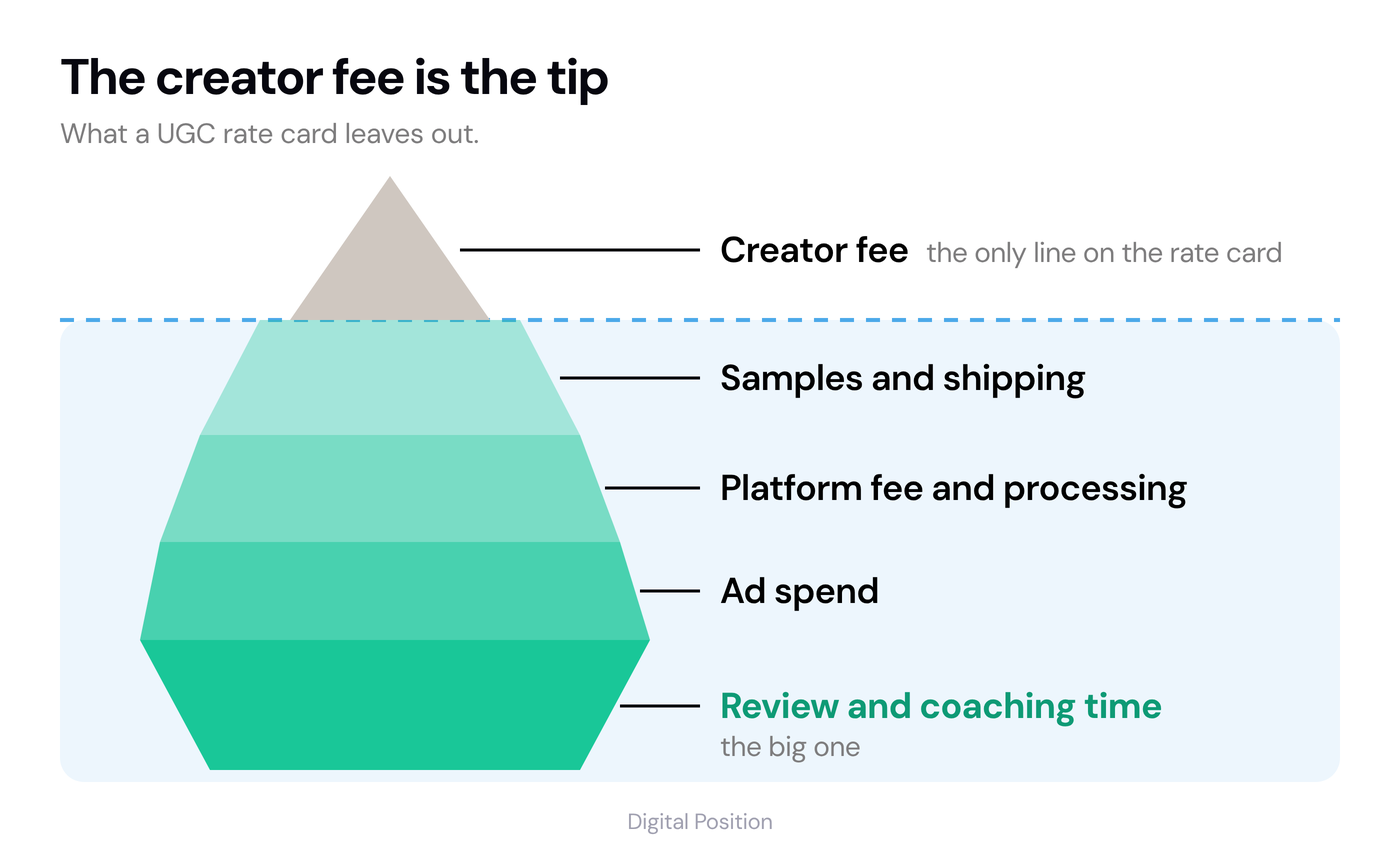
The creator fee is the line everyone budgets. These are the ones that sneak up on you:
- Sample product and shipping
- Trybe’s platform fee, plus payment processing (ACH is cheaper than card)
- The ad spend to run the videos
- Review and coaching time
That last one is the big one, and it grows with every submission you receive. Reviewing 100 submissions takes the same work whether 20 pass or 70 do. It’s also why we price our own management on how many submissions we commit to review.
Most creators are bad at first. Getting good content out of a program takes hundreds of messages a week, and a review backlog is the fastest way to lose your best people. One week, a program we run had 115 submissions waiting.
Plan the sample budget like a real line item. If 30 creators request product, be ready to ship 30 units, and know that some of those creators will never post.
The single most expensive mistake on Trybe is shipping samples to creators who never post. We cap samples at 2 products per creator, send no second sample until they post, and remove anyone who hasn’t posted within 30 days of getting product.
If you’re still deciding whether the model fits, start with what to know about Trybe UGC before you launch.
Why a 10-Video Test Costs More Than You Think
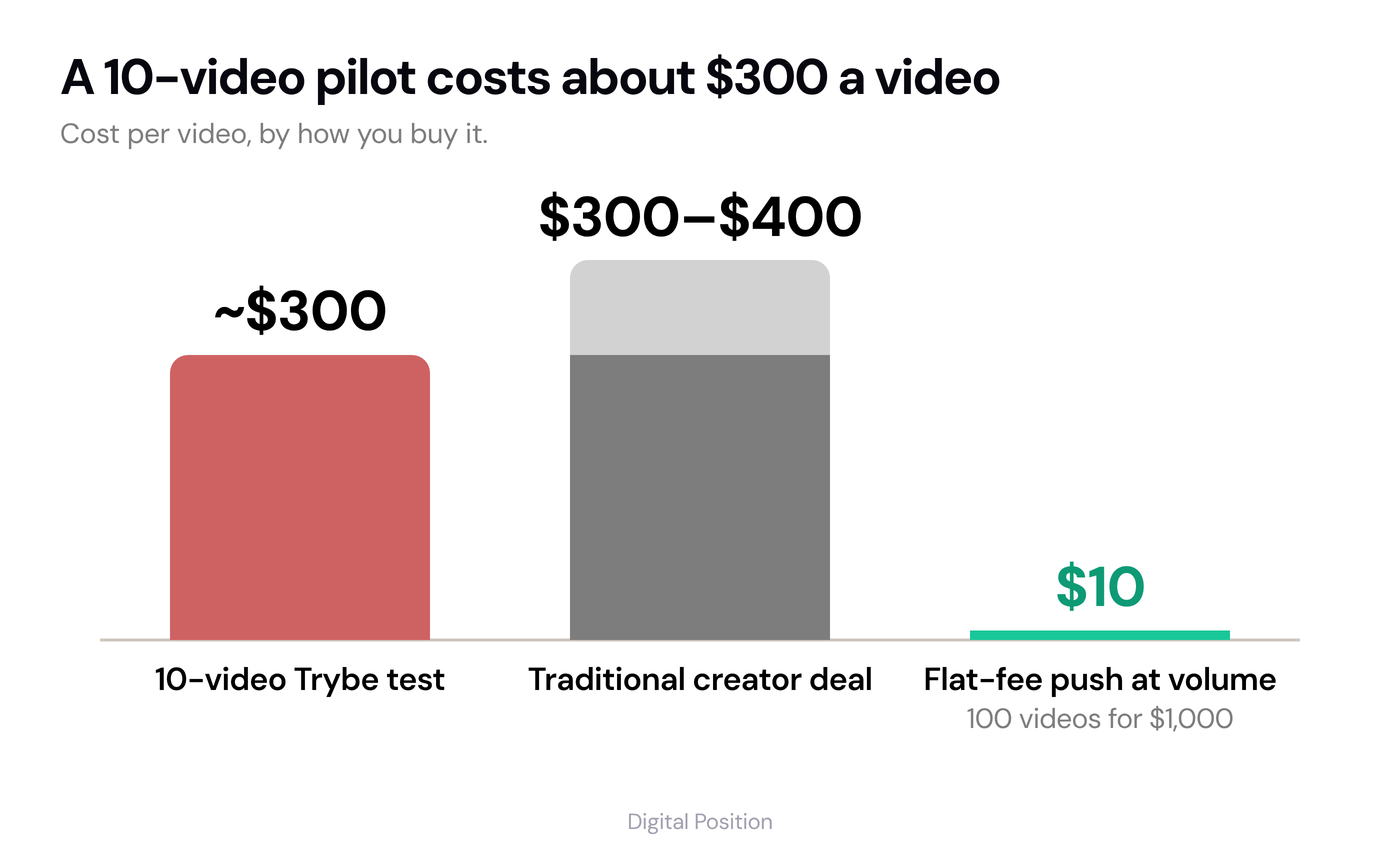
Brands love a small pilot. Ten videos, see what happens.
On Trybe, that math breaks. By our numbers, a 10-video test works out to about $300 a video. That’s the same as any flat-fee UGC buy, minus the volume that makes Trybe worth running.
If you want to test cheaply, test with volume instead of a tiny sample. Compare a short flat-fee push at $10 per submission. That’s 100 videos for $1,000, against roughly $300 to $400 a post through traditional creator deals.
Upfront pay like that also tends to keep creators consistent, and their content gets better over time as they learn what you approve. We often recommend earmarking a set monthly amount, around $1,000, for creator content fees so the pipeline never dries up.
Trybe’s edge is volume, and a pilot too small to find a winner proves nothing.
How to Budget a Creator Program That Finds Winners
Set the guardrails before launch:
- A monthly approval budget. At $100 per video, $5,000 covers 50 approvals.
- A cap of 5 submissions per creator per week
- Generous terms early, dialed back once momentum builds
Review payouts, budget, and retainers every month. When a creator turns into a proven seller, move them to a higher commission tier or a retainer so they keep making for you.
Then plan the ad side. An approved video that never gets built into an ad is money spent with no return. Volume only pays off when someone is building those videos into a structure that gives each one a fair read.
That’s the part we run. Our Trybe program management covers the creators and the Meta account together. Speak with a strategist if you want help sizing a budget.
Key Takeaways
- Rate cards price one video, and your budget should price a winner
- Expect about 70% of submissions approved and one standout per 50 to 80 videos
- Trybe’s platform fee tops out at 1.5%, and the bigger costs sit around it
- Launch hybrid, with a flat fee plus 10 to 15% commission
- Skip the 10-video pilot, because Trybe only pays off at volume
Frequently Asked Questions
How Much Do UGC Creators Charge Per Video?
The widely cited average is about $150 to $212 per video. Experienced creators charge $300 to $500+, with usage rights on top.
How Much Does Trybe Cost?
Trybe is free to start and charges no more than 1.5%. Creator payouts, samples, and ad spend are separate.
What Commission Should I Offer Creators on Trybe?
Our programs usually run 10 to 15%. Pair it with a flat fee per approved video at launch to fill the pipeline.
How Many UGC Videos Does It Take to Find a Winner?
On our programs, about one standout per 50 to 80 videos. Treat that as directional.
Is Flat-Fee UGC Cheaper Than Trybe?
Flat-fee UGC can look cheaper per video. Trybe usually wins on cost per winner, because you pay on results and get the volume a winner needs.



no replies